
Sheen levels: matte to high gloss
Finish is set by the final grit sequence and guard selection. We will recommend a sheen based on how much daily traffic, visibility, and maintenance you want.
Serving Tampa, Florida & surrounding areas
Mon–Fri 8am–6pm Sat 9am–2pm
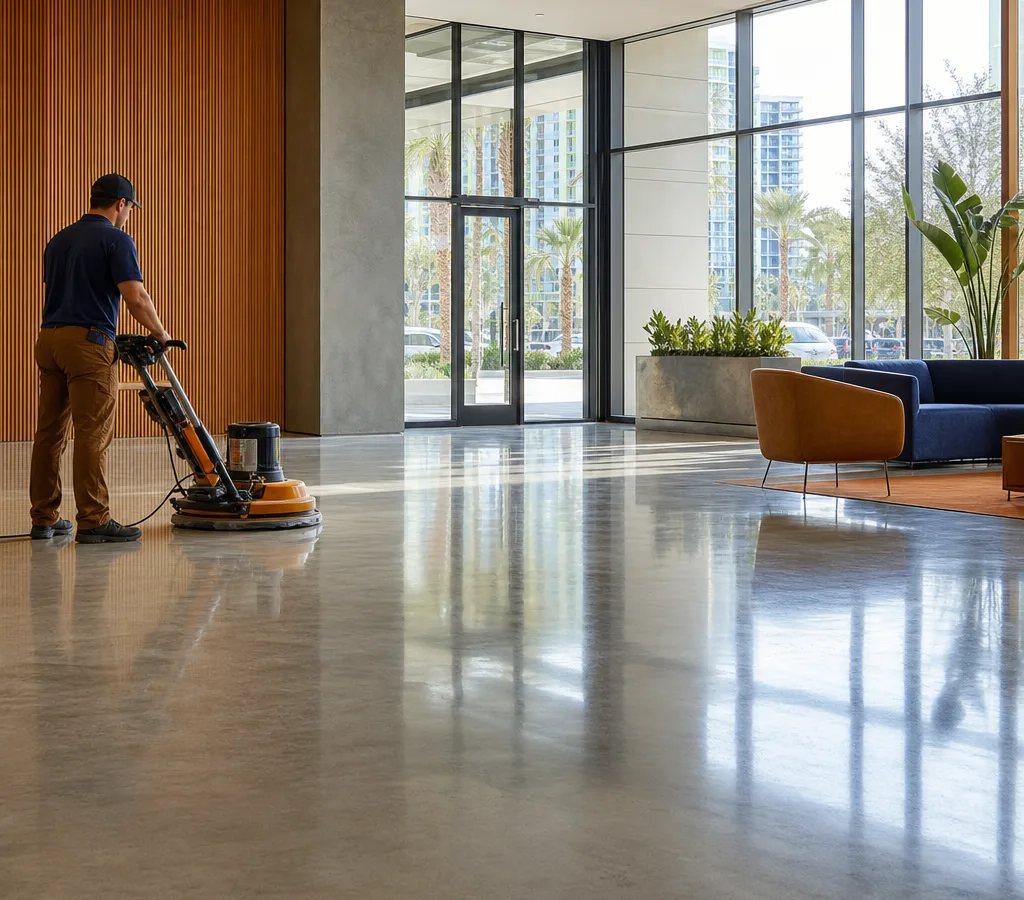
Concrete polishing in Tampa, Florida
Turn dull, dusty slabs into clean, reflective floors with professional grinding, densifying, and polishing for homes and commercial spaces across Tampa.
🎁 Bonus Coupon Inside
Durable floors without a peelable coating
If you are searching for concrete polishing Tampa FL, you are usually after two things: a floor that looks sharp and a surface that holds up without constant upkeep. Polished concrete is a mechanical finish created by grinding the slab with progressively finer diamond tooling, applying a densifier to harden the surface, then polishing to the sheen you want.
In Tampa, polished concrete makes sense for busy households, storefronts, restaurants, offices, warehouses, and showrooms because it resists dusting, cleans up fast, and does not require coatings that can peel. Many projects also benefit from Florida's year-round humidity control needs: a properly prepared slab with the right densifier and a penetrating guard is easier to keep looking consistent than a soft, porous surface.
Concrete Tampa handles the full scope of concrete polishing in Tampa, including surface evaluation, joint and crack repair options, stain removal where possible, and the polishing system that matches your traffic level and look.
Preparation defines the finish
Concrete polishing is not a single pass with a buffer. The outcome depends on the slab you start with and the prep done before the final polishing steps.
Typical goals we help Tampa clients hit:
You will also get a clear plan for dust control and room-by-room sequencing. In occupied homes or open businesses, that planning matters as much as the polishing itself.
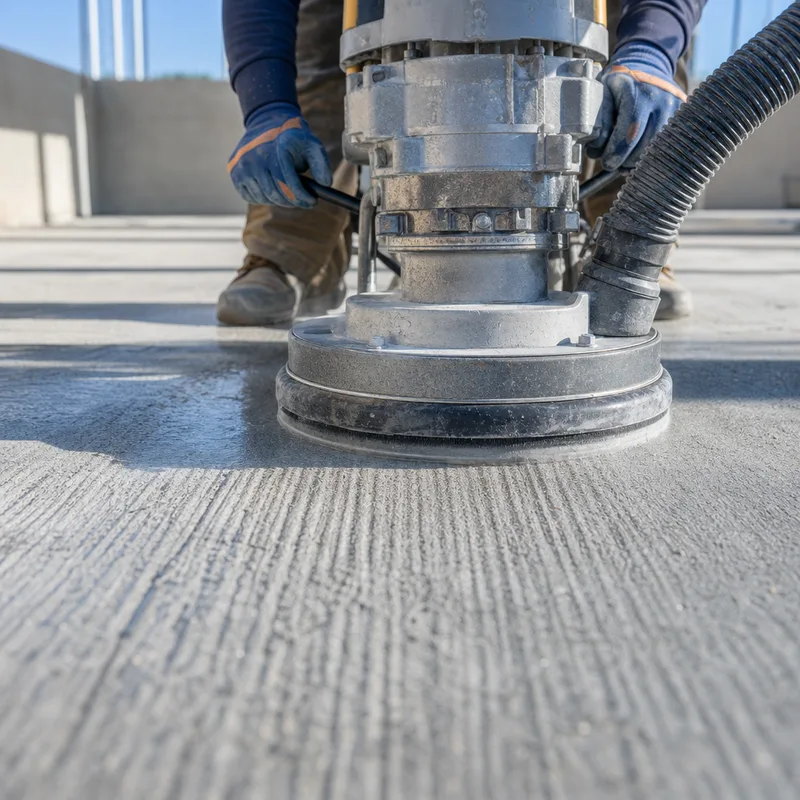
Match the system to the slab
Finish is set by the final grit sequence and guard selection. We will recommend a sheen based on how much daily traffic, visibility, and maintenance you want.
A light grind keeps more of the surface paste for a smoother, uniform look. Deeper grinding exposes sand and stone for a terrazzo-like appearance, but it can require more prep.
Lithium or sodium silicate densifiers harden the slab. A penetrating guard can improve stain resistance and make routine cleaning easier in kitchens and retail.
Cracks, spalls, and joint issues can often be repaired before polishing. We will be upfront about what will blend and what may remain visible in the final floor.
Old adhesive, paint, thinset, and uneven spots change the approach. When needed, we include aggressive grinding steps before moving into the polishing sequence.
We can phase work by rooms or zones to keep your space usable, and we coordinate noisy steps and curing windows around your hours of operation.
From slab review to final sheen
Each stage refines the slab, controls the scratch pattern, and moves the floor toward the agreed exposure and sheen.
We look at slab condition, flatness, existing coatings or adhesives, and moisture risk, then confirm the sheen target and whether you want cream polish or aggregate exposure. You will get a written scope so the result is defined before any grinding starts.
We mask off sensitive areas, set up vacuum dust extraction, and handle repairs, patching, and joint work that should be done ahead of polishing. If old mastic or coatings are present, we choose tooling that removes them efficiently without overheating the slab.
We run a grit sequence that matches the finish and the slab. This is where floors are made flat and scratch patterns are refined so the final polish reads evenly under Tampa's bright natural light.
We apply a concrete densifier at the correct stage and allow it to react. This step hardens the surface and improves long-term durability, especially in busy commercial spaces.
We polish up through the finishing grits and apply a guard if specified. Afterward, we walk the floor with you, confirm the sheen, and leave a simple maintenance plan based on your use case.
Pricing starts with slab condition
Concrete polishing in Tampa typically ranges from about $3 to $10 per square foot, with small residential rooms often landing toward the mid to upper end because of mobilization and detail work. Larger commercial floors with straightforward access can price lower per square foot when the slab is in good shape.
Your final price depends on slab condition (cracks, spalls, uneven areas), how much coating or glue must be removed, the level of aggregate exposure, edge/detail work, and the sheen level you want. The exact scope and cost are confirmed after an on-site evaluation of the slab and access.
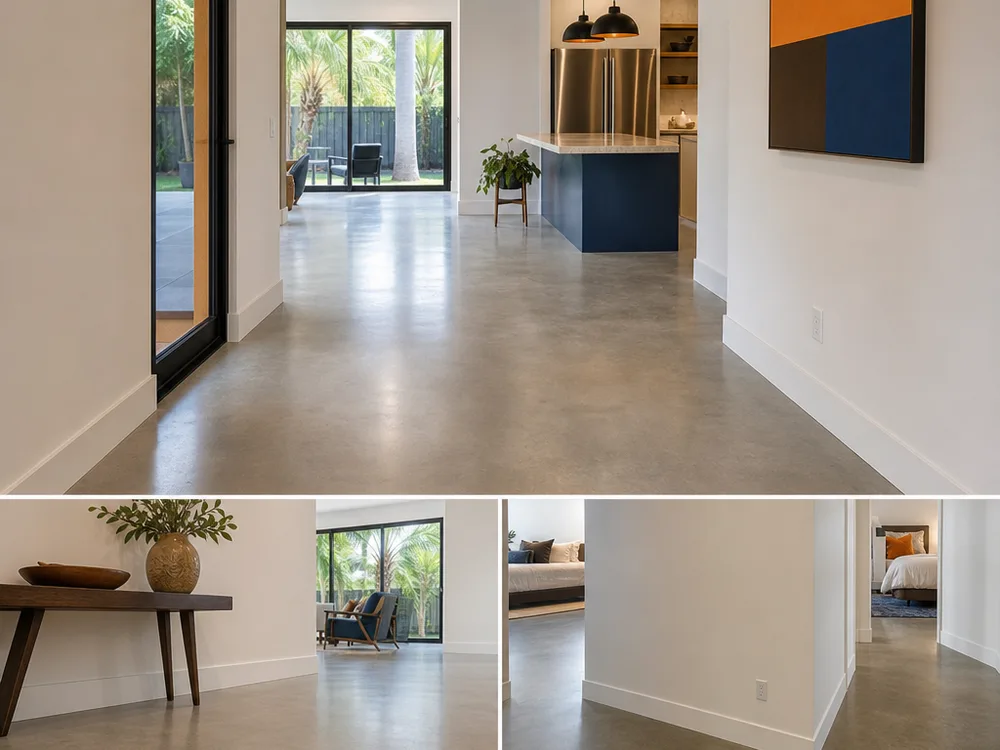
Finish and exposure examples
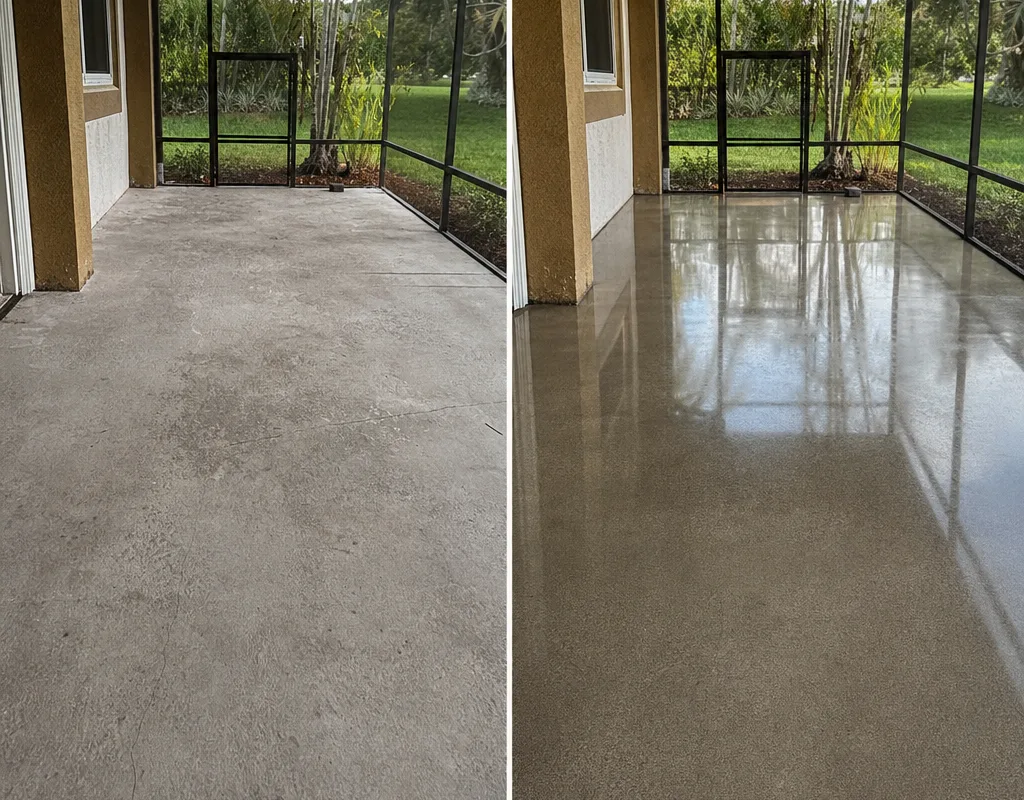
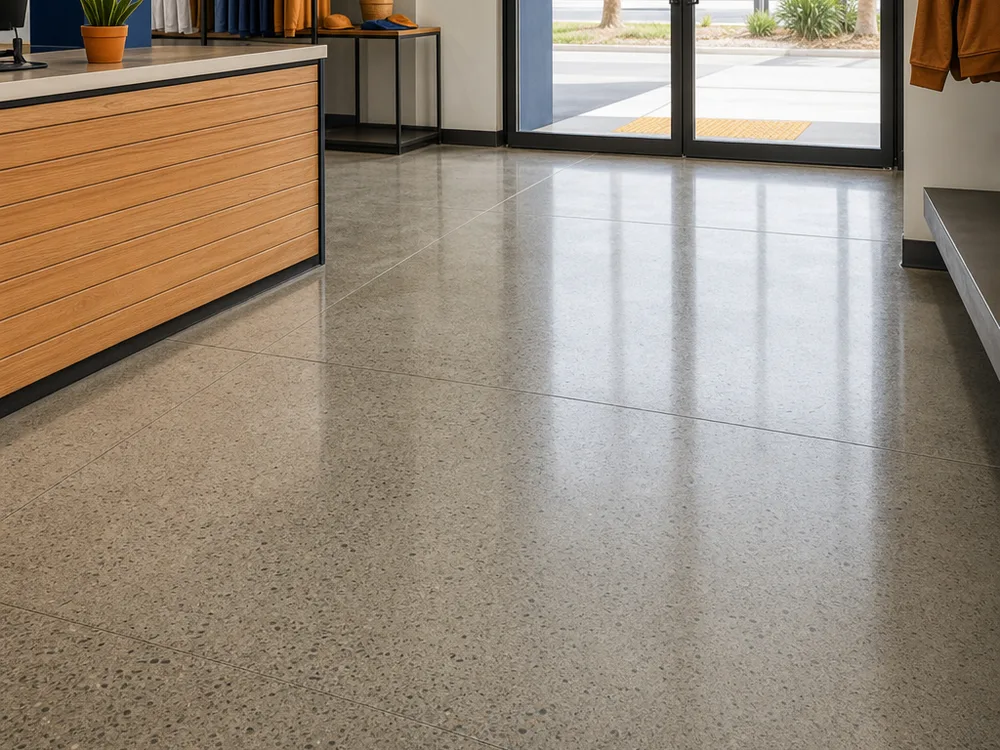
Planned for Tampa properties
Different parts of Tampa ask different things from a floor.
South Tampa, including Hyde Park and Palma Ceia: Many homes and renovated spaces prioritize a clean, modern look with easy cleaning. A matte or satin polish is common because it hides daily footprints while still looking refined under large windows.
Downtown and Channelside: Condos often have strict access rules and elevator hours. We plan tooling, staging, and debris handling so grinding and polishing can move efficiently without tying up common areas longer than necessary.
Ybor City: Older buildings and converted spaces can have mixed substrates, prior adhesives, and patched areas. We set expectations early on what will blend, what will remain visible, and whether an aggregate exposure finish would make repairs look more intentional.
Westshore and the area near Tampa International Airport: Polished concrete is popular for offices, showrooms, and back-of-house areas because it stands up to rolling loads and frequent cleaning. When the slab is sound, polishing is a practical finish that keeps maintenance simple.
Our focus stays on polishing outcomes: surface prep, scratch refinement, densification, and an even finish.
Answers before the slab visit
Most polished concrete projects take 1 to 4 days depending on square footage and how much prep the slab needs. A clean, open commercial area can move faster per square foot, while a lived-in home with tight rooms, furniture moves, and more edge work usually takes longer. During the site visit we will confirm sequencing so you know which rooms or zones will be available each day.
Yes, but coating and adhesive removal changes the tooling and the timeline, and it can affect the final look. Some adhesives pull unevenly and leave shadowing that remains visible even after polishing, especially in high-gloss finishes. We will assess what is on the slab and recommend either a deeper grind (more aggregate exposure) or a finish level that keeps appearance consistent.
A polished concrete floor can be slick when there is standing water, like any smooth hard surface, but traction depends on the finish level, maintenance, and the presence of contaminants like oils. For entryways, restaurants, and similar spaces, we can recommend a sheen and guard combination that balances appearance with practical grip, and we will outline cleaning products that do not leave a slippery residue.
No, most cracks and control joints remain visible, even after repair, because concrete moves and the joint pattern is part of the slab design. We can often fill and stabilize cracks and joints to reduce chipping and make them less noticeable, but polished concrete is honest about the slab. If you want the most uniform look possible, we will discuss finish choices that minimize contrast.
Routine maintenance is usually dust mopping plus damp mopping with a pH-neutral cleaner, and prompt cleanup of spills. In busy commercial spaces, an auto-scrubber with the right pads keeps the sheen consistent. If a guard is used, periodic burnishing and re-application schedules depend on traffic; we will leave a simple plan based on how your space is used.
To get an accurate scope, it helps to know the approximate square footage, what is currently on the slab (bare concrete, tile, paint, glue), whether you want a cream finish or aggregate exposure, and how the space is used day to day. If you can share a few photos and any access constraints (tight hallways, stairs, business hours), we can plan the visit around the realities of your property in Tampa.
Start with the slab
Tell us where the slab is, what is on it now, and the finish you want. Concrete Tampa will confirm the prep needed, the polishing sequence, and a written scope based on an on-site evaluation in Tampa, FL 33606.