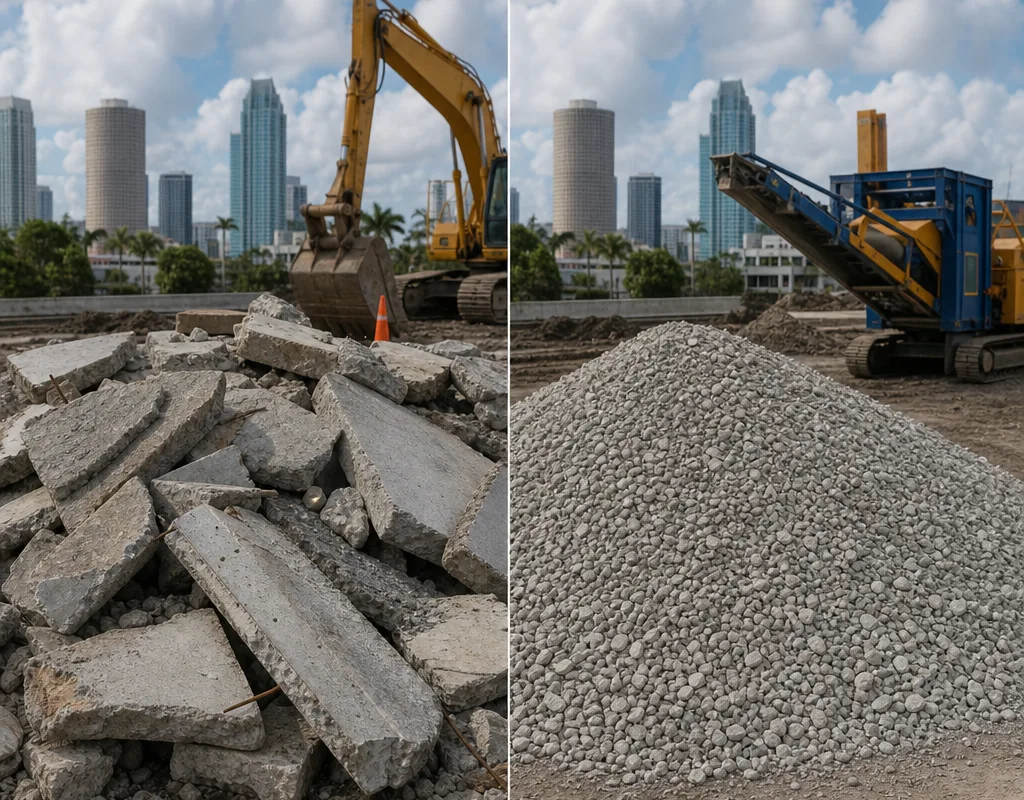
Cleaner staging and traffic flow
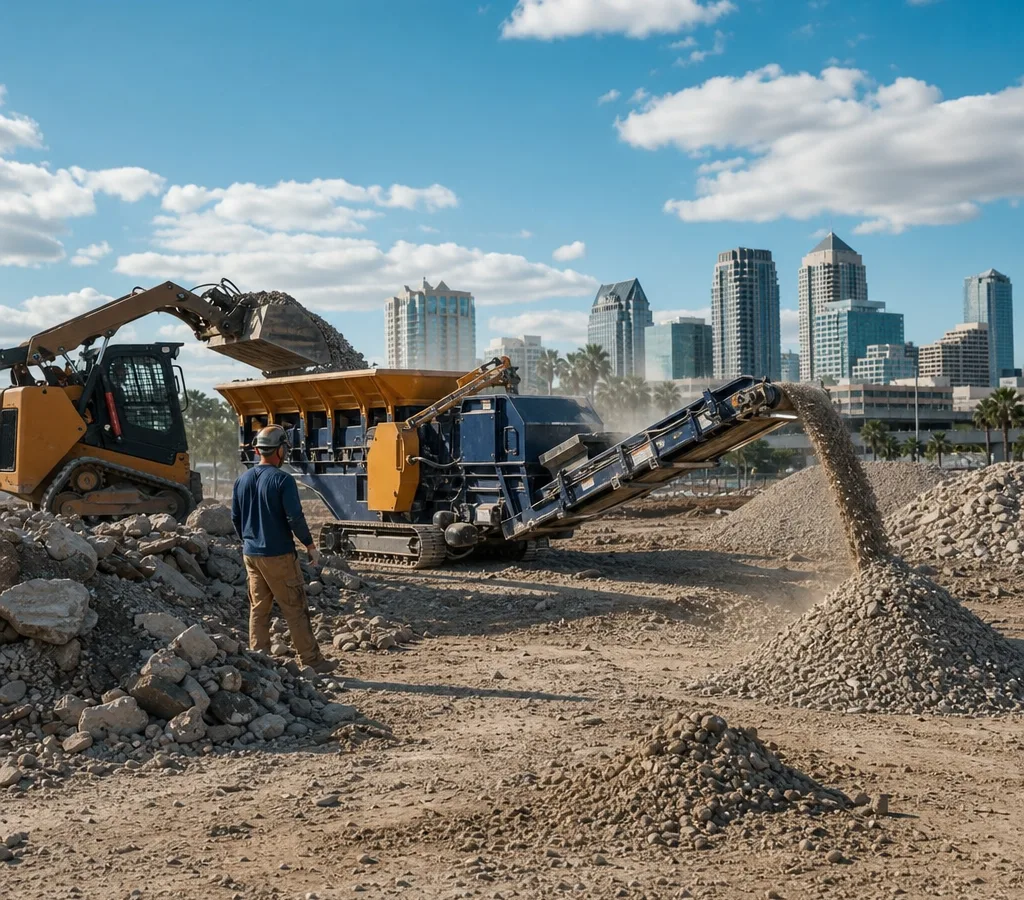
We plan where the crusher sits, where the loader works, and where stockpiles go so trucks, trades, and deliveries are not boxed out.
Serving Tampa, Florida & surrounding areas
Mon–Fri 8am–6pm Sat 9am–2pm
Concrete crushing in Tampa, Florida
Turn broken slab and demolition debris into usable base material without the hauling delays. Get a clear scope, safe onsite processing, and a clean jobsite you can move on from.
🎁 Bonus Coupon Inside
Process material where it sits
If you are searching for Tampa concrete crushing, you are usually trying to solve two problems at once: you need debris gone fast, and you do not want to pay to haul heavy material offsite if it can be reused. Concrete Tampa provides onsite concrete crushing in Tampa, FL to reduce stockpiles, speed up cleanup, and produce a consistent crushed product you can use as base or fill when your project specifications allow.
On many sites around Tampa, trucking and disposal can become the bottleneck. Tight staging areas, traffic, and limited dump availability can drag out schedules. Mobile crushing flips that. We bring the crushing spread to you, process material where it sits, and keep the work area organized so other trades can stay productive.
Our approach is straightforward: confirm what material is suitable to crush, plan safe equipment access, set up stockpile locations, and run the crusher with the right screen or product-size target. You get fewer piles, less double-handling, and material that is easier to grade and compact.
Know the feed and output
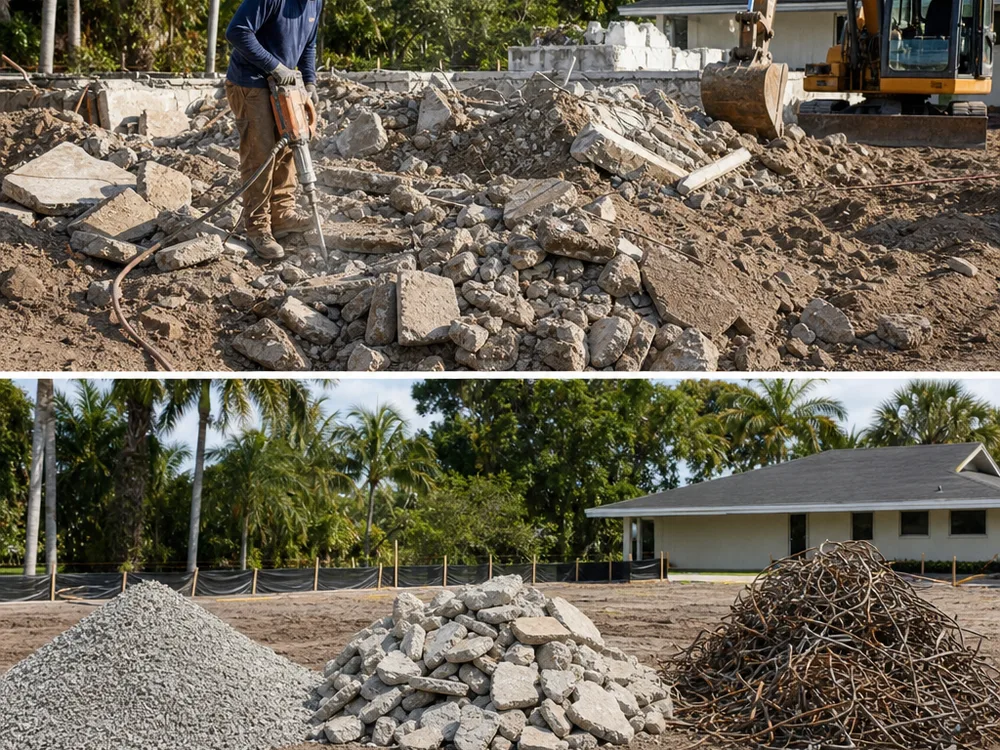
Concrete crushing works best when the feed material is clean and predictable. Typical acceptable material includes broken sidewalks and driveways, warehouse slabs, curb and gutter, footings, and concrete from selective demolition. Rebar and wire mesh are common. A crusher with magnet separation can pull out most steel, and we can stage scrap for removal.
Material that usually needs special handling includes asphalt unless the plan specifically calls for reclaimed asphalt pavement, mixed demolition debris such as wood, drywall, or insulation, soil-heavy loads, and concrete with excessive trash. Contaminated piles can jam equipment and create a product you cannot reuse.
The output is typically a graded crushed-concrete product used as base under pavements or as structural fill where allowed. We can work toward common sizes such as a road-base-style blend or a larger crush depending on how you plan to place and compact it. If your job has engineering requirements, bring the specification and we will plan the setup around it.
If your overall project includes new flatwork after cleanup, you can also review broader concrete options for the rebuild phase.
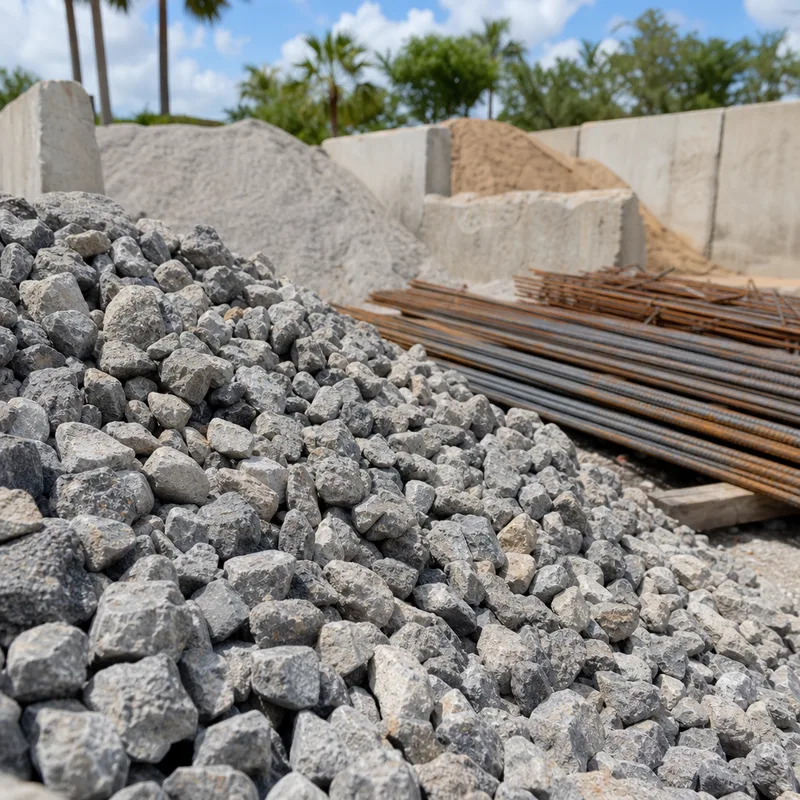
Organized from setup to handoff
We plan where the crusher sits, where the loader works, and where stockpiles go so trucks, trades, and deliveries are not boxed out.
The goal is not just to crush, but to produce material that grades, spreads, and compacts well for your intended use.
Rebar and mesh are handled as part of the workflow so they do not end up buried back into your base material.
We set up to limit dust migration and keep the work zone tidy, especially on sites near active businesses or occupied buildings.
We quote based on the pile, access, expected contaminants, and production goals, then run the job to that plan.
From material review to handoff
A planned sequence keeps equipment movement, production, material quality, and the next construction phase coordinated.
We look at the concrete pile location, estimated volume, reinforcement, and any contamination risks. We also confirm access for lowboy delivery and loader movement.
We establish equipment paths, exclusion zones, and stockpile locations for crushed product and separated steel. On tight urban sites, this planning is what keeps the day efficient.
We crush continuously, adjust feed and settings as needed, and watch for oversize, excessive fines, or mixed debris that could affect the end use.
Crushed concrete can be stockpiled for your crew to spread and compact, or loaded out if the plan is to move it to another location.
We leave the crushing area consolidated and workable, with stockpiles placed where you need them for the next phase of construction.
Plan around the pile and access
Tampa concrete crushing typically ranges from about $1,500 to $6,000+ for a small to mid-size onsite crushing job, with larger commercial stockpiles commonly priced as a daily rate—often $3,500 to $9,000+ per day—depending on equipment and production targets. Your final price changes with pile size, rebar content, contamination, access for delivery and loaders, required product size, dust-control needs, and whether additional sorting is required. Exact pricing is confirmed after a site walk and a written scope.
Built around Tampa access
Tampa projects often have constraints that make onsite processing the practical option.
South Tampa: Older properties and tight lots can limit where debris is staged and where trucks can turn. A mobile crusher setup needs clear equipment paths and stockpile locations to prevent repeated material handling.
Channelside and Downtown: Active streets and dense development can make repeated trucking trips the slowest part of demolition cleanup. Onsite crushing reduces outbound loads and keeps work contained.
Westshore: Commercial sites often have strict schedules and active parking or loading areas. Crushing is typically planned to keep access open and avoid blocking tenant operations.
Ybor City: Narrow streets and limited laydown space can require smaller, carefully staged stockpiles and disciplined loadout. We plan the footprint first, then match production to the available space.
If you are coordinating multiple concrete-related scopes, crushing schedules can also be aligned with broader concrete work so demolition cleanup and rebuilding do not compete for the same space.
Answers before mobilization
Yes, most reinforced concrete can be crushed, and the steel is handled during processing. A magnet and manual cleanup capture rebar and mesh so it does not end up mixed back into the crushed product, and we stage the steel so it can be hauled off separately.
We can typically produce anything from a coarse crush down to a road-base-style gradation, depending on the crusher setup and your end use. If your plans call for a specific base course or compaction specification, share it up front so the product size and screening approach match what you need.
It depends on the site and how the work is being performed, especially for dust, noise, and operating hours. Many projects handle crushing under the same controls used for demolition and construction activity; we can coordinate with your site superintendent so the plan fits the job's requirements and local expectations.
A small pile can sometimes be processed in a partial day, while larger commercial stockpiles often run one or more full days. Duration depends on volume, how consistently the pile can be fed, rebar content, contamination, and how much space you have for stockpiles and equipment movement.
Often yes, crushed concrete is commonly used as base material when the project specification allows it and it is properly graded and compacted. The key is matching the product size to the application and confirming compaction and thickness requirements with your plans or engineer.
We need a rough idea of pile size, what the concrete came from—such as slab, curb, or footings—whether mixed debris is present, and where equipment can enter and stage. Photos help, but a quick site walk is the best way to confirm access, safety zones, and the most efficient layout.
Start with the site
Send a few details about the pile size, access, and your target material use. Concrete Tampa will confirm what is crushable, recommend an efficient setup, and provide a written scope with straightforward pricing.